


In this article
- Why does a noisy vocal cause so many problems?
- Which noises can be saved?
- How is a noisy vocal cleaned? A step-by-step approach
- The most common mistakes when cleaning
- When should we say "re-record"?
- Test the cleaned vocal inside the song
- Pre-recording tips so you don't face the same problem again
- Why is the noise problem more common in Antalya?
- Frequently asked questions
- Conclusion
Some of the artists who come to the studio walk in with the same sentence: "Hey, I recorded the vocal at home, but there's a fridge in the background, the street, maybe the neighbor's drill. Can we save it?" The short answer: a vocal recorded in a noisy environment can usually be saved, but not always to the quality you want. How much can be rescued depends on the type and level of the noise and on how deeply it is mixed into the voice itself. In this article we honestly describe the situations we often run into at the Art N Craft studio in Antalya, what can be done, and where you need to stop.
Let's not be discouraging, but let's be realistic. Noise reduction tools are not a magic eraser; what they do is suppress the parts of the sound spectrum that they decide are "probably not vocal." If the vocal and the noise sit in the same frequency region, everything you suppress also takes a little of the voice itself with it. That's why the real issue is telling which noise can be cleaned and which cannot.
Why does a noisy vocal cause so many problems?
A microphone records everything in the room at the same time. Next to the vocal, the hum of the air conditioner, the computer fan, a motorcycle passing outside or the reverb of the room all end up in the recording. When you run the vocal through a compressor during the mix, the problem grows: a compressor pulls the quiet parts up, so the noise rises with them. When you add brightness with an equalizer, the whisper-like "shhh" gets brighter too.
So the noise you thought was "not that disturbing" in the raw recording often becomes the most audible thing at the end of the mix. Our experience is this: a problem that looks minor at the time of recording looks huge in the finished song.
Which noises can be saved?
As a general rule, continuous noises with a constant character are the easiest to clean. You can think of them in three groups.
The easy ones
Continuous sounds such as an air conditioner, a computer fan, fridge hum and light electrical hiss can be largely removed by capturing a noise profile. These sounds stay the same when the vocal stops, so the tool can "learn" them. We can usually rescue these recordings without trouble.
The medium-difficulty ones
50 Hz mains hum and its harmonics, light room reverb and distant traffic noise fall into this group. Here narrow-band filters, dynamic EQ and de-reverb tools come into play. The result is good, but you have to work carefully, because too much intervention can make the vocal sound "underwater."
The hard or impossible ones
Someone talking at the same time as the vocal, music playing in the background, sudden sounds (a door, a dog barking, a car horn) and broadband noise that sits right on top of the vocal are the biggest problems. These sounds occupy the same frequencies as the vocal and change over time. AI-based separation tools are quite good today, but they can still leave a "glassy" artificiality in the character of the voice.
How is a noisy vocal cleaned? A step-by-step approach
When we rescue a vocal in the studio, we do the following in order. The order matters; an operation done in the wrong order can undo the previous one.
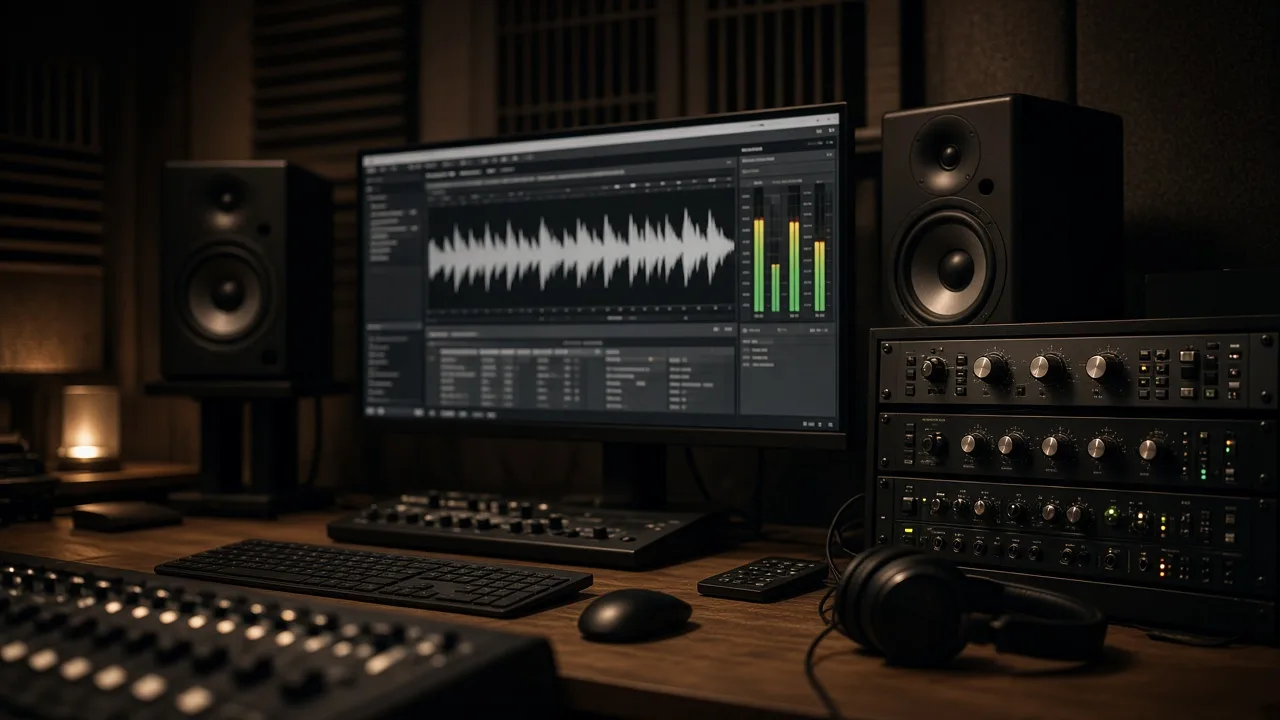
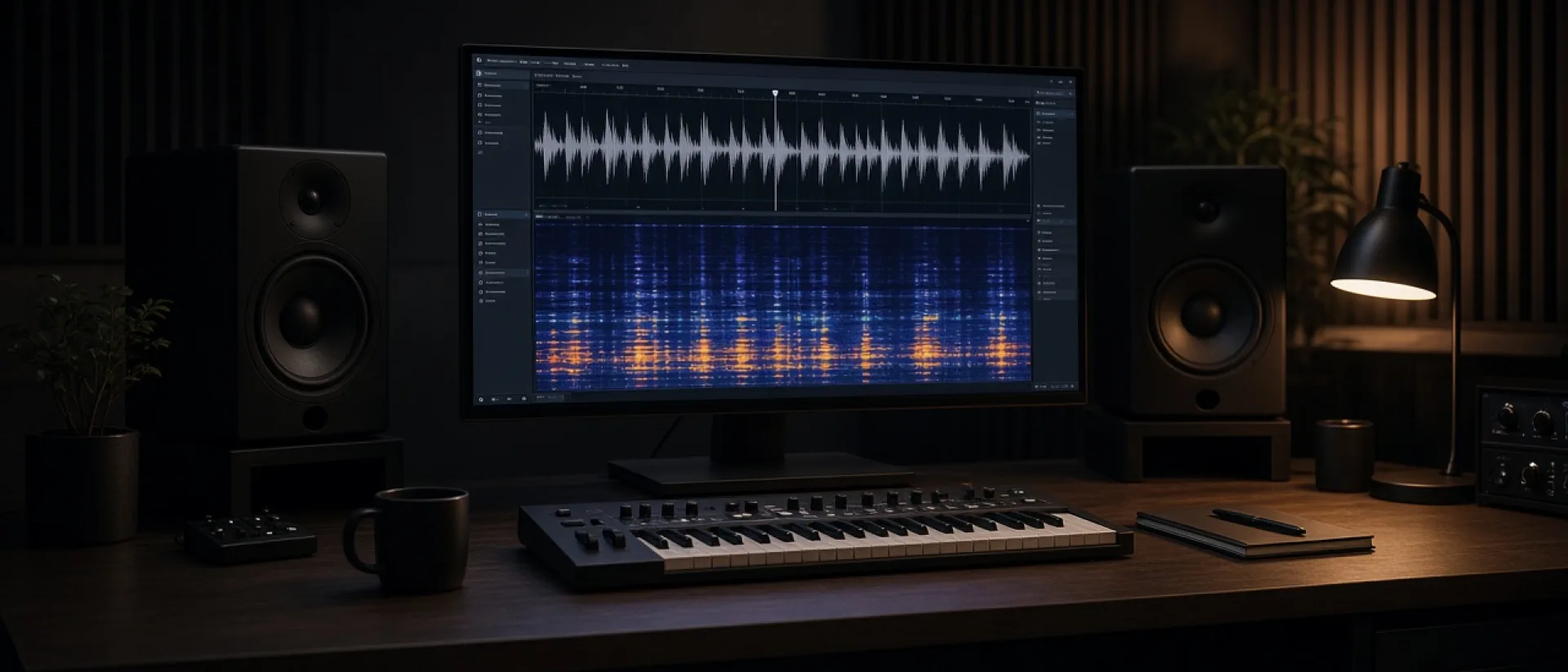
- Listening and diagnosis: We listen to the vocal alone, loudly and on headphones. We identify the type of noise and see on the spectrogram which frequencies it gathers in.
- Manual cleanup: Breaths, gaps between vocal phrases and sudden sounds are cut by hand or lowered in level. This step is safer than automatic tools.
- Filtering: A high-pass filter is applied for unnecessary low frequencies, and narrow-band cuts for hum.
- Noise reduction: A noise profile is captured and applied at a light level. Instead of trying to clean one hundred percent in a single pass, two or three light passes give a more natural result.
- Reverb control: If there is too much room reverb, de-reverb is used, but kept limited.
- Character recovery: The brightness and warmth lost after cleaning are given back with careful EQ and light saturation.
The audio repair guides on iZotope Learn are a good starting point for these tools. We work with a similar logic on most projects; we apply the details in our mixing and mastering service.
The most common mistakes when cleaning
The biggest trap with noise reduction tools is the "more is better" mindset. When you pull the slider all the way, the noise goes away but the vocal becomes robotic, metallic and muffled. This is called an "artifact." Once you start hearing it, it is hard to stop hearing it.
The second mistake is doing the cleanup at the very end of the mix. After the vocal has passed through the compressor and EQ, the noise changes shape and becomes harder to remove. Cleanup should always be at the beginning of the chain. For other common mistakes on the mix side, you can check out our article on the 5 biggest mistakes made in mixing and mastering.
The third mistake is spending endless time trying to rescue the vocal. Sometimes, instead of struggling for hours and ending up with a result that is merely "good enough," re-recording the vocal is both faster and better.
When should we say "re-record"?
To be honest, in some cases the best solution is re-recording. We will recommend it if you see these signs:
- If there is speech or music bleed on top of the vocal.
- If the voice still sounds unnatural after cleaning.
- If the song is going to be released and the vocal is the main element.
- If the noise changes in every phrase of the vocal.
Re-recording lets the vocalist recapture the performance and lets the recording be done properly from the start. Sometimes the second take turns out much better than the first, because by then the song is better known.
Test the cleaned vocal inside the song
When you listen to a vocal solo, the noise can stand out, but inside the song the same noise often sits under the backing track. That's why constantly soloing the vocal while cleaning is misleading. Every so often listen together with the whole mix, and even check it on a phone speaker and in your car. If the noise isn't noticeable, there is no point in intervening further.
The opposite is also true: a vocal you call "OK, clean" while soloed can sound artificial and thin in the mix. For this balance, watch out for ear fatigue, take breaks and listen again the next day. For the perception of hearing and listening levels, you can find many academic sources on sound perception and recording techniques in AES publications.
Pre-recording tips so you don't face the same problem again
The best noise cleanup is never recording the noise in the first place. If you are going to record at home or in a rehearsal room, these simple steps help a lot:
- Turn off the air conditioner, fridge and fan. A short inconvenience during the recording is better than hours of cleanup work.
- Put your phone in airplane mode. Notification vibrations and electromagnetic interference can get into the recording.
- Keep the microphone away from walls and glass. Reflections increase the reverb.
- Consider a dynamic microphone. Condenser microphones pick up more of the room; dynamic microphones, on the other hand, reduce room noise at close distances.
- Sing close to the microphone. The shorter the distance between mouth and microphone, the better the vocal-to-noise ratio.
- Build a temporary corner with blankets and thick fabric. It won't be perfect, but it makes a difference.
If you are looking for more detailed recommendations for a home environment, you can read our recommendations for acoustic recording at home and our equipment recommendations for a home studio. Sound on Sound's technical articles on acoustics and microphone choice are also quite comprehensive.
Why is the noise problem more common in Antalya?
In Antalya the air conditioner almost never gets turned off during the summer months. In most homes and rehearsal rooms there is an air conditioner running during recording as well. Add tourist-season traffic, street noise coming through open windows and crowded apartment living, and getting a clean vocal at home turns into a serious undertaking. That's why many musicians prefer the controlled environment in our studio for vocals. We also talked about the particular challenges and advantages of music production in Antalya in our article making music in Antalya.
The vocal in particular is the barest and most delicate part of a song. You can hide a small flaw in the backing track; hiding a flaw in the vocal is much harder. That's why even a limited budget set aside for vocal recording usually gives the highest return. For details on the recording process and equipment, you can look at our audio recording and production service.
Frequently asked questions
Can a noisy vocal be cleaned completely?
With constant, low-level noises (fan, air conditioner, light hum), it can be cleaned to a very high degree. However, with noises that share the vocal's frequencies or that change over time, a complete cleanup is not possible; the goal is to reduce the noise to a level where it is "not noticeable." Aiming for zero noise usually damages the naturalness of the voice.
Do AI-based noise removal tools work?
Yes, they have improved a lot in recent years, especially for speech and vocals. But they can still leave artifacts, especially in breaths and fine details. We don't use these tools alone, but together with manual cleanup and classic filters.
Can a vocal recorded with a phone or a cheap microphone be saved?
Most of the time, yes, as long as the recording is at a balanced level and has no clipping. A damaged recording, meaning one that has been digitally clipped, cannot really be repaired. In such a case, re-recording is recommended.
Which costs more: cleanup or re-recording?
With light noise, cleanup is more economical. With heavy noise, the hours spent on cleanup can exceed the cost of a short studio session. It's best to have a sample section listened to first and then decide.
Conclusion
A vocal recorded in a noisy environment can usually be saved, but there is a limit to saving it. While continuous and low-level noises are cleaned easily, for variable sounds mixed into the vocal, the right decision is sometimes re-recording. What matters is listening to the vocal and making an honest diagnosis.
If you have a problematic vocal, bring the file to Art N Craft; let's listen together and tell you clearly whether it can be saved. If you want to record anew, you can easily set up a session from our booking page. For the mix and mastering process, check out our mixing and mastering service, and for recording, our audio recording and production service. If you want to learn mixing and mastering yourself, our mix & mastering training is also waiting for you. If you wonder why your song sounds quieter after release, the article why does your song sound quieter on Spotify will also be useful.